Enntal: A Complete and In-Depth Guide to Austria’s Historic Alpine Valley
Understanding Enntal and Its True Meaning
Enntal also commonly spelled Ennstal refers to the long and geographically important valley formed by the Enns River in Austria. The word itself is derived from German, where “Tal” means valley, and Enns refers to the river that defines the region. Together, Enntal literally means “the valley of the Enns,” a name that accurately reflects both its physical and cultural identity.
Enntal is not a single town or village but a broad alpine corridor that has shaped settlement, movement, and economic life for centuries. The valley stretches across multiple Austrian regions, acting as a natural link between high alpine landscapes and lower river plains. Over time, the term Enntal has come to represent not only a geographical space but also a shared historical and cultural region.
The Geographic Setting of Enntal
Enntal extends through central Austria, primarily across the federal states of Styria, Salzburg, and Upper Austria. The valley follows the course of the Enns River from its alpine source to its gradual widening as it approaches the Danube basin. This positioning makes Enntal one of the most structurally significant valleys in the Eastern Alps.
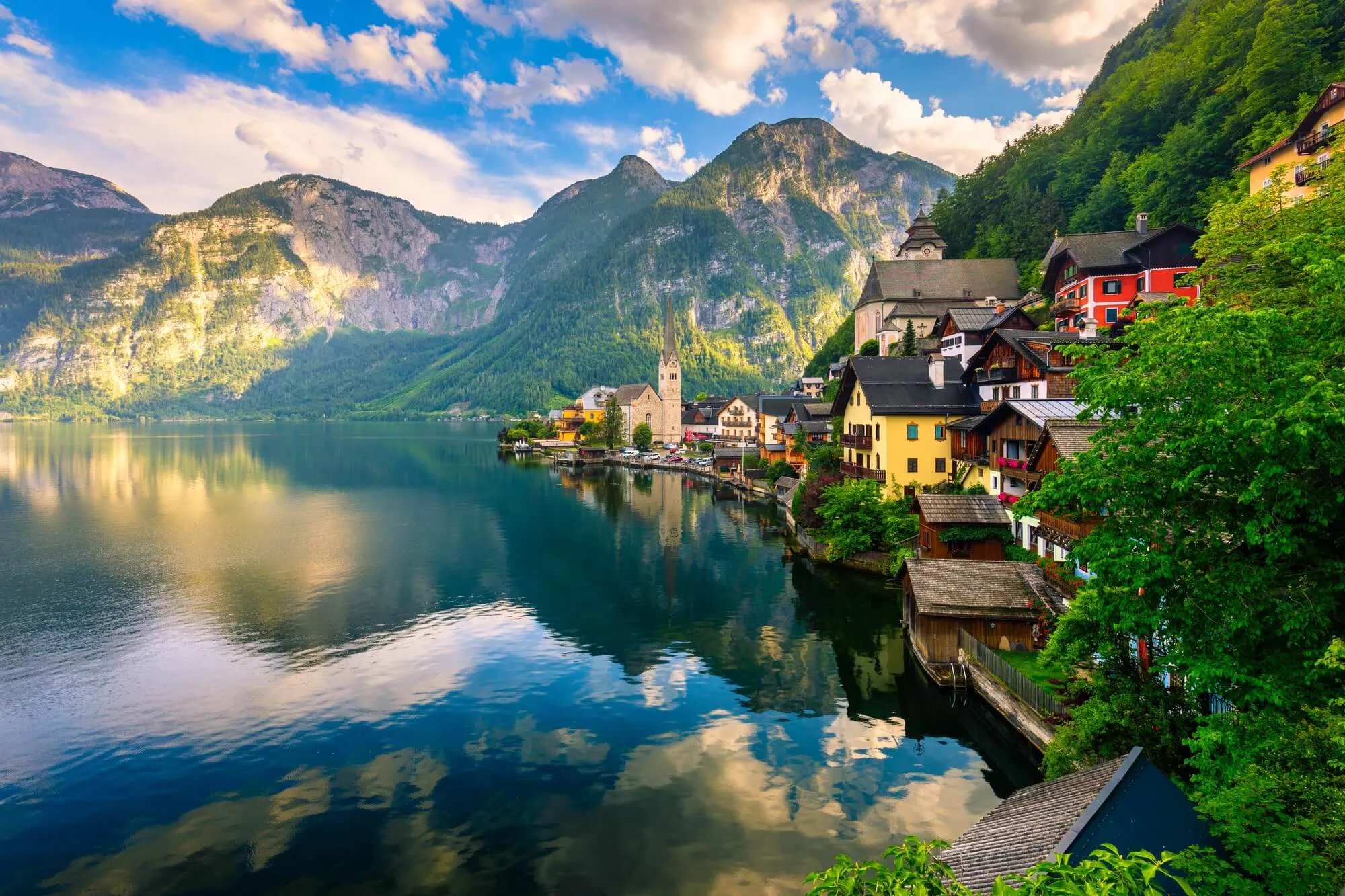
The valley is framed by imposing mountain systems that give Enntal its dramatic appearance. To the north rise the limestone massifs of the Dachstein and the Ennstal Alps, while to the south stand the Schladminger and Radstädter Tauern ranges. These mountains create a natural enclosure, giving the valley a clear identity and distinct climatic conditions.
Geologically, Enntal was shaped over millions of years through tectonic movement, erosion, and glacial activity. During the Ice Ages, massive glaciers carved the valley floor, smoothing its contours and leaving behind fertile soils that later supported agriculture and settlement. This geological history is still visible today in the valley’s broad sections, narrow gorges, and rocky outcrops.
The Enns River as the Lifeline of Enntal
At the heart of Enntal lies the Enns River, the longest river in Austria that flows entirely within the country. The river is far more than a physical feature; it is the lifeline that has sustained human life in the valley since prehistoric times. Early settlements formed along its banks, drawn by fresh water, fertile land, and natural transport routes.
As the river travels through Enntal, it changes character. In higher alpine sections, it flows swiftly through narrow channels, while in broader valley areas it slows, creating floodplains and meadows. These variations influenced how communities developed, where towns emerged, and how land was used for farming, grazing, and trade.
Historically, the Enns River also served as a natural boundary between regions and political entities. In medieval times, it marked borders between duchies and played a role in administrative organization. Even today, the river remains a defining feature of Enntal’s identity and landscape.
Climate and Natural Environment of Enntal
The climate of Enntal is strongly influenced by its alpine setting. Winters are typically cold, with reliable snowfall in higher elevations, while summers are mild to warm, especially in the valley floor. This seasonal contrast contributes to the region’s ecological diversity and makes Enntal suitable for a wide range of natural habitats.
Forests dominate the slopes surrounding the valley, with spruce, fir, and larch trees forming dense woodland at mid-altitudes. Higher elevations give way to alpine meadows, where grasses and wildflowers thrive during the short summer months. These meadows have long been used for seasonal grazing, a practice that continues to shape the landscape.
Wildlife in Enntal reflects its relatively preserved environment. Deer, chamois, marmots, and a variety of bird species inhabit the region. Rivers and streams support fish populations and contribute to the overall ecological balance of the valley. The combination of mountains, forests, and water makes Enntal an important natural region within Austria.
Historical Development of Enntal
Human presence in Enntal dates back thousands of years. Archaeological findings suggest that prehistoric communities used the valley as a migration route and settlement area. Its sheltered terrain and access to water made it a favorable environment long before written history.
During Roman times, Enntal gained strategic importance as part of transalpine routes connecting northern and southern Europe. Roads followed the natural contours of the valley, facilitating trade, military movement, and cultural exchange. Remnants of Roman infrastructure have been found in and around the region, highlighting its long-standing role as a corridor.
In the Middle Ages, Enntal developed into a network of farming villages, market towns, and religious centers. Agriculture, forestry, and mining formed the backbone of the local economy. The valley’s communities were shaped by feudal systems, monasteries, and later by regional trade networks. Many traditional settlements still retain medieval layouts, reflecting this historical continuity.
Cultural Identity and Traditions of Enntal
The cultural identity of Enntal is deeply rooted in alpine traditions and rural life. Folk customs, seasonal festivals, and traditional dress continue to play a role in community life. These traditions are not preserved as museum pieces but remain part of everyday culture, especially in smaller villages.
Language and dialect also contribute to Enntal’s uniqueness. Local speech patterns reflect both Bavarian and Styrian influences, shaped by centuries of relative isolation within the mountains. Oral storytelling, music, and folk songs have historically been important ways of passing down local history and values.
Religious traditions are another key aspect of cultural life in Enntal. Churches, chapels, and pilgrimage routes are common features of the landscape, often located on hilltops or near village centers. These religious sites have long served as social and spiritual anchors for valley communities.
Economic Life and Traditional Occupations
For much of its history, Enntal’s economy was based on agriculture and natural resource use. Farming focused on livestock, dairy production, and alpine pastures, while forests provided timber for construction and trade. These activities shaped land use patterns that are still visible today.
Mining also played a role in certain parts of Enntal, particularly where iron ore and other minerals were accessible. Mining towns developed alongside transport routes, contributing to regional growth and technological advancement during the medieval and early modern periods.
In more recent times, tourism has become an important economic factor. However, unlike heavily commercialized destinations, Enntal has largely maintained a balance between economic development and environmental preservation. This balance helps protect the valley’s character while supporting local livelihoods.
Enntal as a Destination for Nature and Exploration
Enntal attracts visitors who seek natural beauty, authenticity, and space rather than mass tourism. The valley offers access to hiking routes, alpine landscapes, rivers, and quiet rural settings. Its appeal lies in its diversity, from gentle valley walks to challenging mountain terrain.
Cycling along the Enns River has become particularly popular, as the valley’s length and varied scenery provide an ideal route through changing landscapes. At the same time, winter transforms Enntal into a snow-covered alpine region, offering opportunities connected to mountain environments rather than urbanized resorts.
Despite its growing popularity, Enntal retains a sense of calm and continuity. Many visitors are drawn by the feeling that the valley is lived in rather than staged, with real communities and traditions shaping the experience.
The Modern Role of Enntal in Austria
Today, Enntal continues to function as a vital geographic and cultural region within Austria. It connects alpine areas to lower plains, supports sustainable agriculture, and preserves a strong regional identity. Infrastructure developments have improved accessibility, yet much of the valley remains shaped by its natural limits.
Environmental awareness has increased in recent decades, leading to conservation efforts and protected areas within and around Enntal. These initiatives aim to safeguard biodiversity, landscapes, and water resources while allowing responsible human activity.
Enntal also plays a role in Austria’s broader cultural narrative, representing the enduring connection between people and alpine landscapes. It stands as an example of how geography, history, and culture can merge into a coherent regional identity.
Why Enntal Remains Unique
What sets Enntal apart is not a single landmark or attraction but the way its elements come together. The river, mountains, climate, and human history form a unified whole that has evolved over centuries. Enntal is neither frozen in the past nor overwhelmed by modern change.
The valley’s strength lies in its continuity. Traditions adapt rather than disappear, landscapes are used rather than exploited, and communities remain connected to their environment. This balance gives Enntal a lasting relevance in a rapidly changing world.
Conclusion
Enntal is far more than a geographic term. It is a living alpine valley shaped by natural forces and human experience. From its geological origins and historical pathways to its cultural traditions and modern role, Enntal represents a deep and enduring relationship between land and people.
For those seeking to understand Austria beyond famous cities and landmarks, Enntal offers insight into the country’s alpine heart. Its landscapes tell stories of time, its villages reflect resilience, and its river continues to shape life along its course. Enntal remains a powerful example of how place and identity are inseparable.