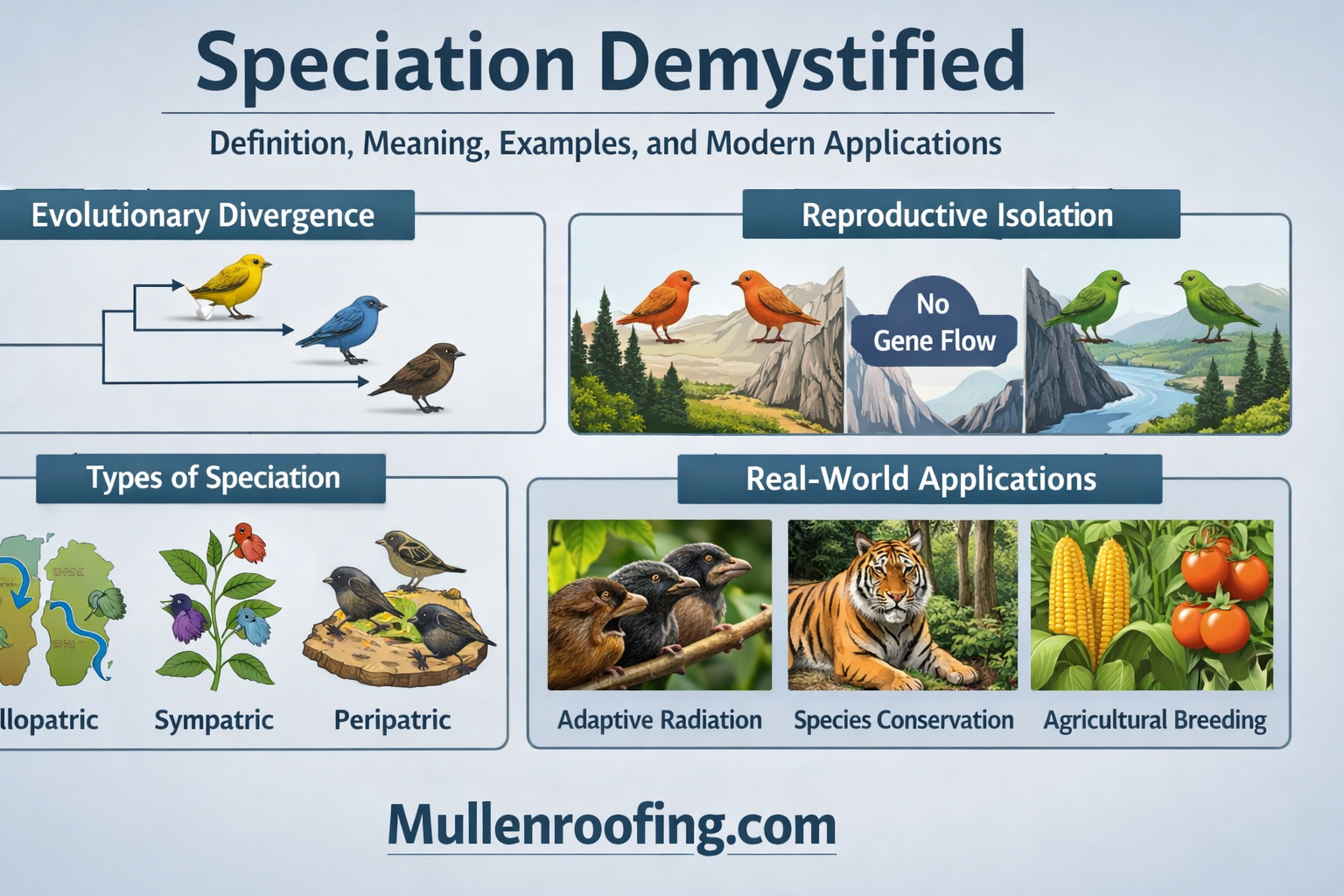
Speciering Demystified: Definition, Meaning, Examples, and Modern Applications
Speciering is an increasingly relevant concept in multiple domains, ranging from biology to business strategy and content creation. It refers to the process of structured differentiation or specialization, allowing individuals, organizations, and systems to focus on distinct characteristics or niches. Understanding speciering provides a framework for optimizing processes, improving targeting, and enhancing overall efficiency across various applications.
The modern relevance of speciering extends beyond academic discussions. In today’s fast-paced digital and professional environment, the ability to differentiate effectively has become critical for success. Whether in natural ecosystems, business segmentation, or audience customization, speciering offers insights that can guide practical decisions and measurable outcomes.
What is Speciering? Definition and Core Meaning
Speciering can be defined as the process of identifying and distinguishing distinct entities based on specific characteristics or criteria. Originally connected to the biological concept of speciation, speciering has evolved to encompass broader applications. It involves the deliberate categorization or differentiation of systems, populations, or audiences to achieve clearer understanding and more effective management.
At its core, speciering emphasizes intentional focus rather than random division. In professional contexts, this means organizations or content creators can concentrate resources and strategies on defined targets. By clearly understanding the boundaries and traits of each segment, speciering enables better decision-making, optimized performance, and more precise outcomes in various applications.
History and Evolution of Speciering
The origins of speciering trace back to the biological term speciation, first coined in the early 20th century. In biology, it describes how populations gradually diverge and form distinct species. Over time, scholars and practitioners expanded the concept, recognizing that structured differentiation could apply to non-biological systems such as organizations, markets, and content platforms.
Through its evolution, speciering has shifted from a purely scientific term to a versatile framework. In the modern context, it has become a valuable tool for analyzing and managing complexity. This evolution highlights its adaptability, demonstrating that the principles underlying speciering can be applied wherever clarity, organization, and targeted differentiation are needed.
Examples of Speciering Across Different Domains
In biology, speciering occurs naturally when populations of organisms develop unique traits over generations. Environmental factors, genetic variation, and reproductive isolation contribute to this divergence, resulting in distinct species. Understanding this process helps scientists predict evolutionary trends and maintain biodiversity.
In business and marketing, speciering is used to segment audiences and tailor strategies to specific market niches. Companies that apply speciering can better meet the needs of diverse consumer groups, increase engagement, and maximize conversions. Similarly, content creators use speciering to customize blogs, websites, and services for distinct audience segments, enhancing relevance and user experience.
Speciering also plays a role in technology and systems management. By structuring processes and workflows according to specific characteristics or requirements, organizations can streamline operations and reduce inefficiencies. This approach ensures that resources are applied where they are most effective, aligning efforts with clearly defined objectives.
Modern Applications and Benefits of Speciering
Modern applications of speciering extend into business, education, digital content, and organizational management. Businesses can adopt speciering strategies to refine marketing campaigns, identify growth opportunities, and allocate resources more efficiently. In education, it helps tailor learning experiences for diverse student needs, fostering more effective instruction and engagement.
The benefits of speciering are substantial. It allows for increased operational efficiency, improved audience targeting, enhanced decision-making, and greater competitive advantage. By differentiating clearly and strategically, organizations can minimize resource wastage and optimize outcomes. Individuals and teams also benefit from a focused approach that reduces distractions and clarifies priorities.
Common Misconceptions and Challenges
One common misconception about speciering is that it is only relevant to biology. While its roots are biological, speciering’s principles have broad applicability in business, digital strategy, and process optimization. Misunderstanding its versatility can prevent organizations from fully leveraging its potential.
Challenges in applying speciering often arise from improper segmentation or overcomplication. Attempting to differentiate too many elements or neglecting critical characteristics can undermine the benefits. Successful implementation requires careful analysis, clear criteria, and consistent evaluation to ensure the distinctions made are meaningful and actionable.
Future of Speciering
The future of speciering is closely tied to advancements in technology, data analysis, and artificial intelligence. As digital systems become increasingly complex, the ability to differentiate, categorize, and customize will grow in importance. Organizations that embrace speciering strategically will be better equipped to navigate evolving markets and diverse audiences.
Emerging trends suggest that speciering will expand into predictive analytics, automated segmentation, and adaptive learning systems. This evolution will enhance its role as a decision-making tool and competitive strategy. By anticipating future applications, professionals can integrate speciering into their workflows to achieve long-term success and sustainable growth.
Conclusion
Speciering is a powerful concept that bridges multiple fields, offering a structured approach to differentiation and specialization. By understanding its definition, history, examples, and applications, individuals and organizations can unlock greater efficiency, precision, and effectiveness. Implementing speciering thoughtfully enables better targeting, improved performance, and strategic advantage across diverse domains.
Recognizing its potential ensures that decisions, strategies, and processes are informed by clarity and focus. In a world of increasing complexity, speciering provides a framework to navigate change, optimize outcomes, and achieve measurable success in both professional and personal contexts.