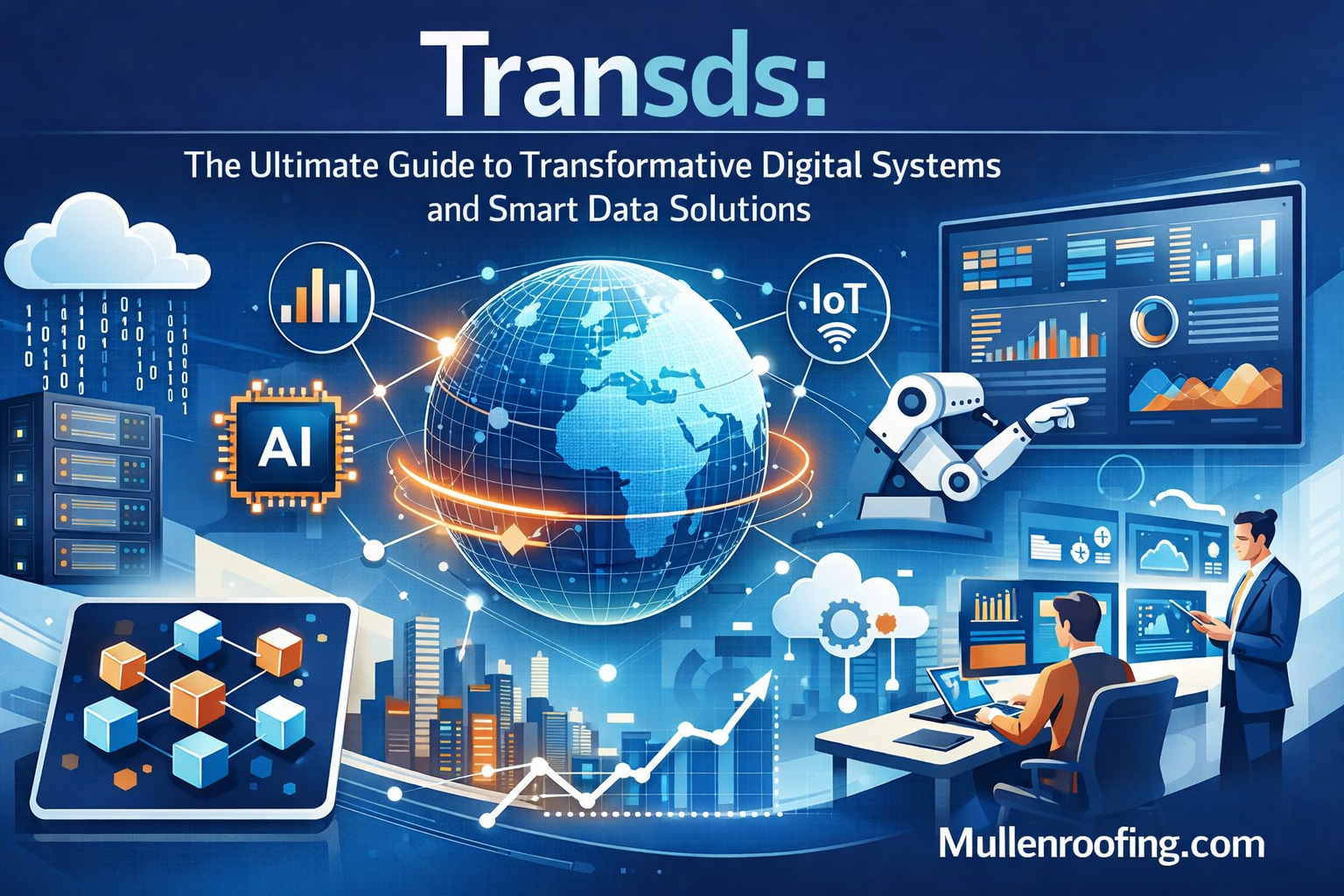
Transds: The Ultimate Guide to Transformative Digital Systems and Smart Data Solutions
Transds, or transformative digital systems, is a revolutionary concept reshaping how businesses, organizations, and technology ecosystems operate. At its core, Transds integrates artificial intelligence, automation, and interconnected networks to streamline workflows, improve decision-making, and enhance efficiency. Unlike traditional digital systems, Transds adapts in real-time to changing data patterns, ensuring smarter outcomes for users and businesses alike. The rise of digital transformation has made understanding Transds essential for staying competitive in modern industries.
The concept of Transds is not limited to one sector. It encompasses programming languages, data management frameworks, AI-driven tools, and even applications in IoT environments. By providing flexibility and scalability, Transds empowers organizations to respond to challenges faster than ever. Its ability to handle vast amounts of data and generate actionable insights makes it an indispensable part of technological evolution, particularly in industries that rely heavily on information flow and operational agility.
What is Transds?
Transds is a broad term that refers to systems designed to transform and optimize digital operations. These systems leverage advanced algorithms and AI-driven mechanisms to process data efficiently and adapt to user needs. Unlike traditional software, which follows static rules, Transds continuously learns from incoming data to improve decision-making, automate repetitive tasks, and predict outcomes. This dynamic nature sets Transds apart in both technology and business applications.
Beyond automation, Transds also plays a role in data structuring and transformation. In programming and analytics contexts, Transds frameworks facilitate the organization, processing, and interpretation of complex datasets. These systems are particularly valuable in environments where data changes rapidly, such as financial markets, healthcare analytics, and IoT networks. Understanding Transds helps organizations build smarter infrastructures that are flexible and future-ready.
Key Components of Transds
The effectiveness of Transds relies on several critical components. First, advanced AI and machine learning algorithms are central to its functionality. These algorithms enable systems to analyze patterns, anticipate outcomes, and make real-time adjustments. By integrating predictive analytics, Transds helps businesses reduce errors, optimize operations, and make informed strategic decisions across multiple sectors.
Another essential element of Transds is interconnected networks and IoT devices. These systems create a seamless flow of information across devices, software, and platforms. Data management and analytics also play a vital role, enabling organizations to process and extract actionable insights from large volumes of structured and unstructured information. Together, these components ensure that Transds delivers high efficiency, adaptability, and scalability.
Applications of Transds Across Industries
Transds has applications across diverse industries, transforming workflows and operational efficiency. In the business sector, Transds automates complex processes, enabling faster decision-making and improved productivity. Companies using Transds can streamline operations, reduce manual errors, and optimize resource allocation. This capability makes it an indispensable tool for modern enterprises seeking a competitive advantage.
Healthcare is another area where Transds excels. AI-driven analytics, patient monitoring, and automated administrative processes enhance medical decision-making and improve outcomes. Similarly, in software development, Transds frameworks assist in testing, deployment, and data analysis, ensuring smoother project execution. Even industries like logistics, finance, and energy are leveraging Transds to increase efficiency and enhance predictive capabilities. Its versatile applications demonstrate the transformative power of this technology.
Benefits of Implementing Transds
One of the key benefits of Transds is enhanced decision-making. By providing real-time insights and predictive analytics, these systems allow organizations to anticipate challenges, reduce risks, and optimize strategies. Transds also improves operational efficiency by automating repetitive tasks and streamlining complex processes, saving both time and resources.
Scalability is another significant advantage. Transds adapts to changing business requirements, making it suitable for organizations of all sizes. Companies that adopt Transds early can leverage innovative solutions, gain competitive advantages, and foster a culture of continuous improvement. Additionally, by integrating AI and IoT, Transds allows businesses to operate more intelligently, enhancing both customer experience and internal workflows.
Challenges and Considerations
While Transds offers remarkable advantages, it also presents challenges that require careful consideration. Integration with existing infrastructure can be complex and resource-intensive. Businesses need to evaluate system compatibility, potential downtime, and employee training requirements to ensure smooth implementation. Data security and privacy are also critical concerns, especially when handling sensitive information.
Cost and expertise are additional factors. Implementing Transds may require investment in hardware, software, and skilled personnel. Smaller organizations may find this challenging without proper planning. Despite these hurdles, with strategic deployment and ongoing support, Transds can deliver substantial long-term benefits, making it a worthwhile investment for forward-thinking organizations.
Future of Transds
The future of Transds is promising, fueled by ongoing advancements in AI, cloud computing, and IoT. Emerging technologies will enhance the adaptability and intelligence of Transds systems, enabling even more sophisticated automation and real-time insights. Businesses that integrate Transds early will be well-positioned to capitalize on evolving technological trends and remain competitive.
As industries become more data-driven, Transds will continue to redefine digital transformation. Its capacity to combine automation, analytics, and interconnected networks will drive innovation, operational excellence, and improved decision-making. From healthcare to finance to logistics, the next decade will see Transds becoming an integral part of digital infrastructure worldwide.
Conclusion
Transds represents the next generation of digital systems, offering unmatched adaptability, intelligence, and efficiency. By combining AI, IoT, and advanced data analytics, Transds transforms the way businesses and industries operate. While implementation requires planning, investment, and expertise, the benefits far outweigh the challenges. Adopting Transds now ensures organizations are prepared for the evolving demands of a technology-driven world.